
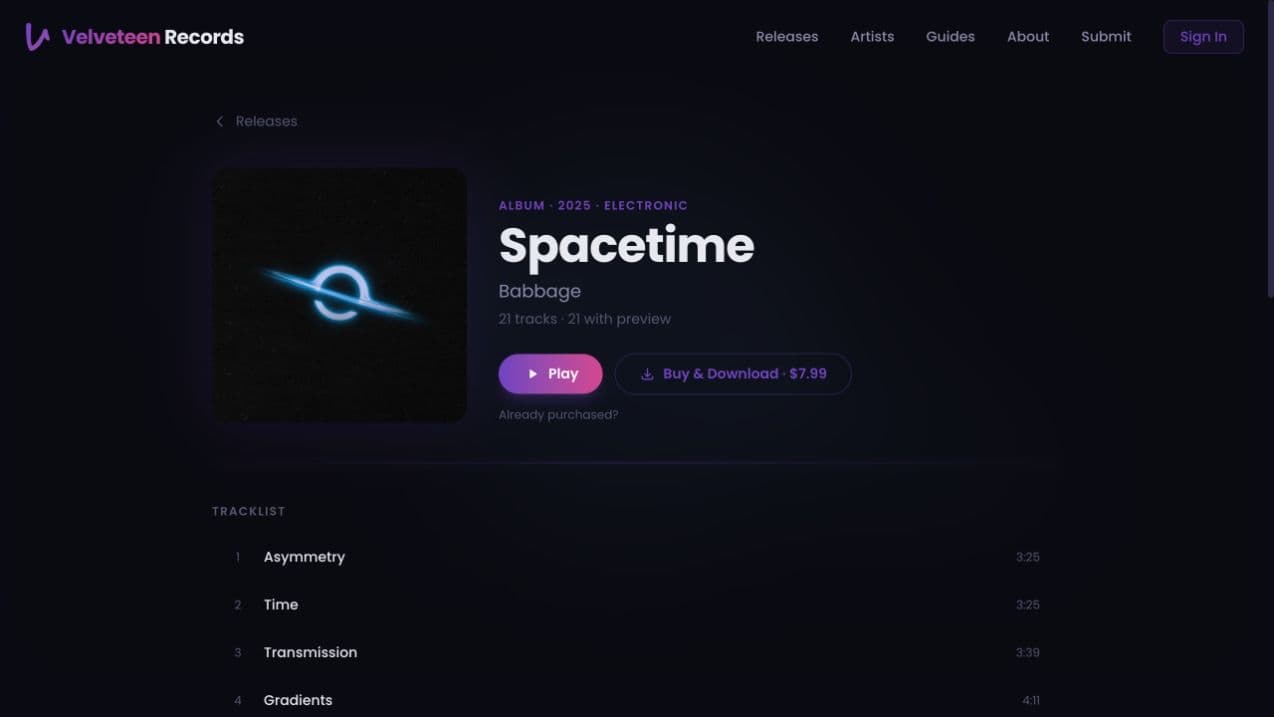
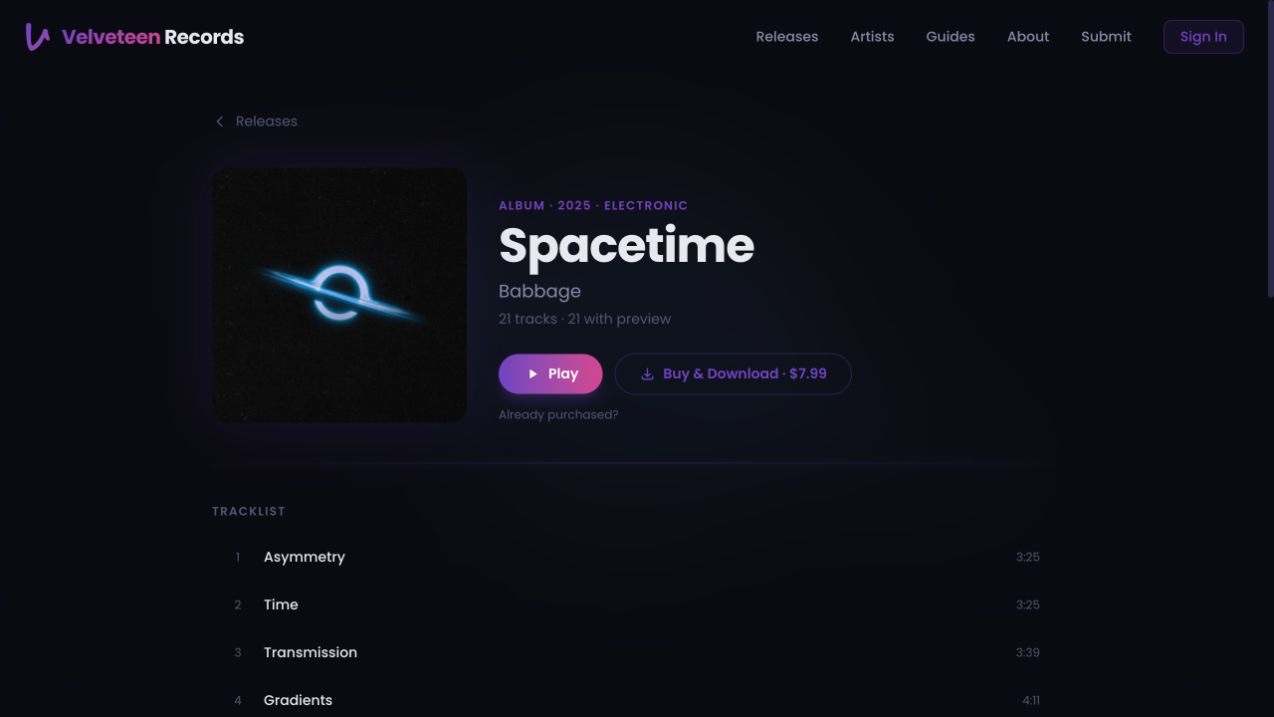
Velveteen Records is our label website, built and operated alongside our own music products. We followed Babbage’s artist and Spacetime release pages and inspected committed catalog and player code. This story concerns the website we built; it does not present the musicians on the roster as custom-software clients.
Discovery starts with a relationship.
A visitor may begin with an artist they recognise or an album that catches their attention. The site needs both entrances. The public artist page groups music under Babbage; the release page links back to the artist and presents the album’s tracks.
Spacetime’s public release page shows its artwork, title, artist, format, track count, listening control, and purchase entry. These are actual published catalog details, not invented case-study data.
Keeping those relationships navigable gives someone context without making them start their search again. It also provides a predictable place for a release’s own information instead of duplicating it across unrelated landing pages.
One catalog supplies several presentations.
The committed website imports a catalog file and exposes lookups for artists and releases. Release pages use that data for the track list and metadata; artist pages select the releases attached to an artist. The current source therefore describes a published snapshot, not a live query for every page visit.
A snapshot makes the publication boundary explicit. New or corrected catalog information must reach that file and the served site before a visitor sees it. Sharing an upstream catalog with another product does not by itself prove that all websites are refreshed simultaneously.
That tradeoff is relevant to directories, portfolios, and product catalogs: decide how information becomes public, how stale records are identified, and who is responsible for a correction.
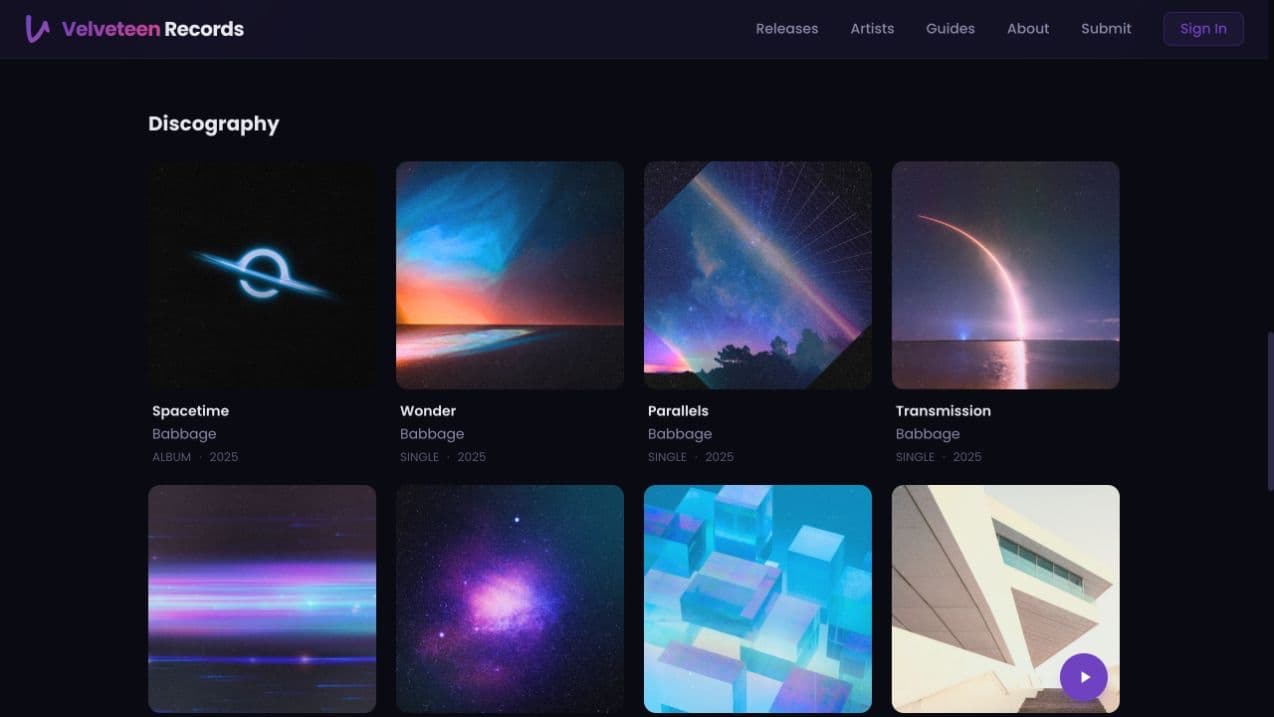
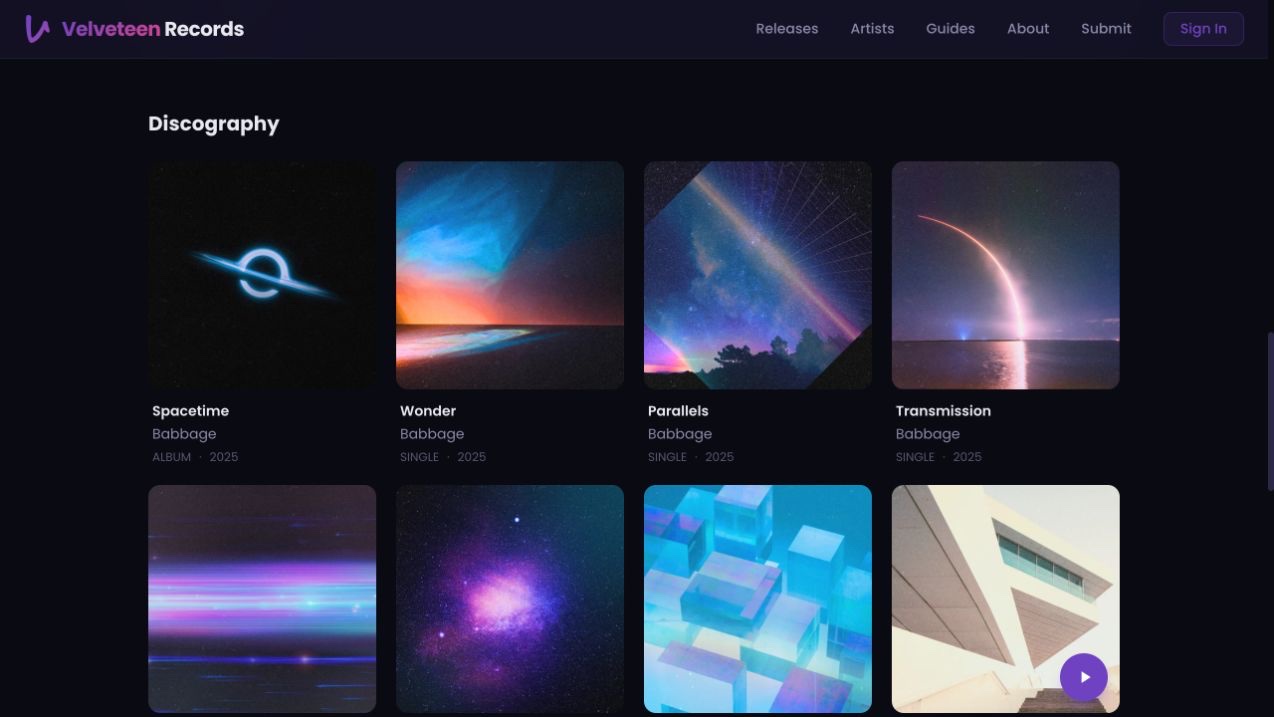
The listening state belongs outside one card.
The public release page exposes individual track controls and a Play button. Committed player code maintains the selected track, release, and queue in a shared provider. It handles movement between playable tracks instead of making every catalog card operate an unrelated player.
That matters when someone moves from discovery to a release detail page. The interface needs to know what is selected and distinguish an unavailable preview from a track that can be played. A catalog record alone does not guarantee that its media will load on a particular device.
We inspected the public controls and source, but did not run a full audio-compatibility or network-recovery test. We make no playback-quality, latency, or accessibility-conformance claim from these captures.
Listening and ownership are different paths.
The release page includes Buy & Download and Already purchased entry points. In committed code, purchase state is checked through a verification request, and the page has a separate recovery flow for an existing purchase. Merely seeing a checkout button is not evidence of a successful transaction.
We did not create a checkout, purchase music, submit an email, or retrieve a download. The story establishes the public entry points and their implementation shape, not a completed payment or an audit of entitlement protection.
For a store or member portal, the underlying question is practical: how can someone distinguish browsing, preview access, and an entitlement they already have? Recovery is part of the journey, even though it is less prominent than the main purchase action.
An owned website still needs operational care.
The website’s content, player, publication snapshot, and purchase paths have different failure cases. A release can be correctly listed while a media file is unavailable, or a listener can need help finding an earlier purchase. Those are product responsibilities, not only visual details.
This story demonstrates our own catalog website and the decisions behind its interfaces. It does not claim increased sales, listening time, artist growth, or completed commerce tests. The Babbage story looks at a related catalog through an individual artist’s presentation.
Connect discovery to a useful destination.
For another catalog, identify what each level should answer.
- Collection
- What helps someone choose a person, category, or product?
- Detail
- Which facts and actions belong to the selected record?
- State
- What should persist when someone changes pages?
- Recovery
- How does someone return to access or work they already have?
See the product for yourself.
We checked the public product pages and the implementation behind the workflows on October 11, 2026. These links let you explore the public experience.